Back to blog
2 min read
The Future of AI-First Product Development: Scaling Code and Intelligence
How modern engineering teams integrate LLMs, vector search, and edge computing to build high-performance products.
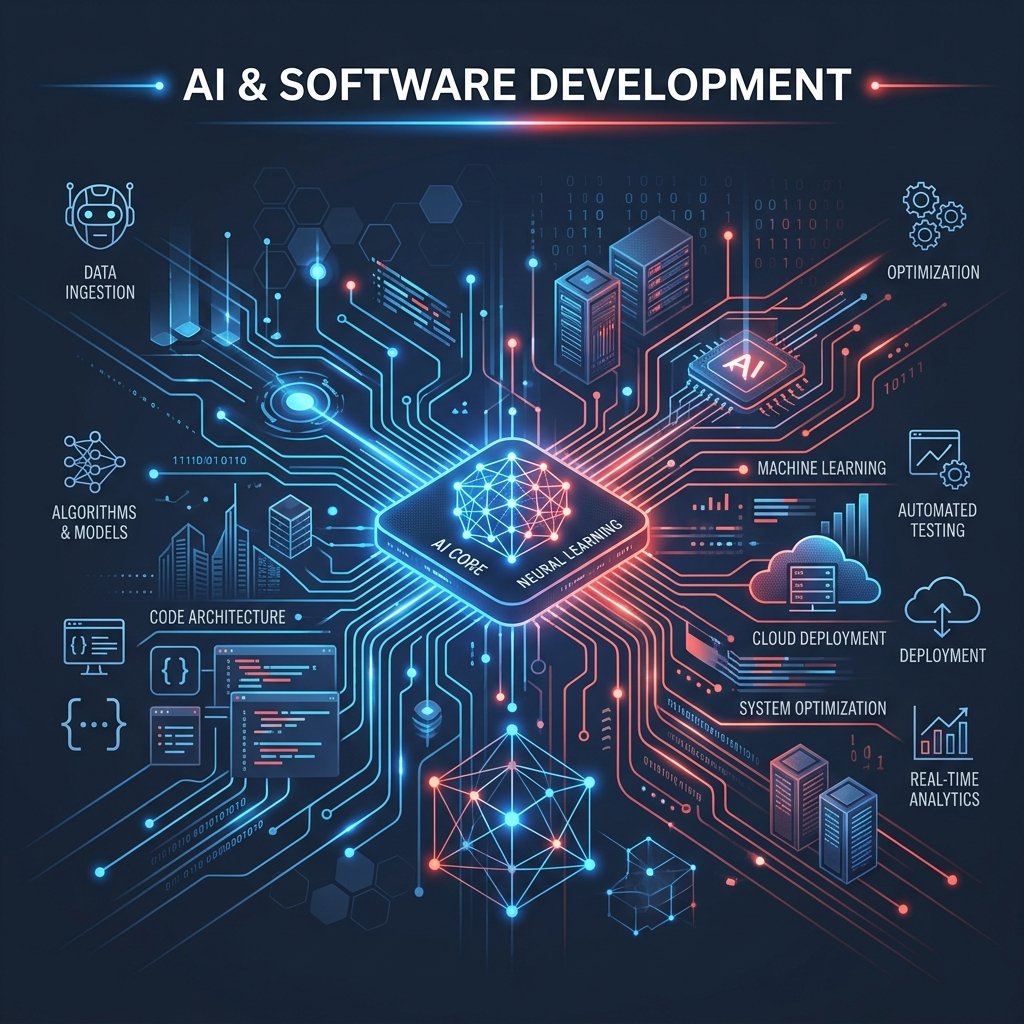
In the current digital landscape, the phrase "AI-first" is transitioning from a marketing buzzword into a fundamental software architecture paradigm. Engineering organizations are no longer simply querying external APIs; they are embedding intelligence directly into their product loops, query paths, and background pipelines.
### The Shift in Architecture
Traditional web applications rely on a deterministic flow: users send requests, servers run business logic against a relational database, and static responses are returned. AI-first development introduces non-deterministic nodes.
To scale these workflows without sacrificing latency, teams are turning to structured design patterns:
1. **Context Window Caching**: Storing vector database query results and common agent responses near the user edge (e.g., via Cloudflare Workers or Redis edge setups).
2. **Hybrid Retrieval (RAG)**: Combining keyword search with vector semantic queries to ensure accuracy while maintaining low compute costs.
3. **Model Routing**: Routing simple queries to smaller, open-source models (like Llama-3-8B) and delegating complex reasoning to larger frontier models (like Gemini 1.5 Pro).
### Optimizing for Speed and Cost
Integrating AI introduces a massive latency penalty. A simple database lookup takes less than 20ms, while a generated agent response can take several seconds. To address this, teams are utilizing streaming protocols (Server-Sent Events) to return tokens immediately to the user interface, improving perceived latency.
Additionally, fine-tuning task-specific models and using semantic caching layers helps teams save up to 60% on token consumption fees.
### The Way Forward
The future of software is agentic. The companies that build clean, modular pipelines where agents can safely perform transactions, optimize resources, and self-correct errors will dominate their industries. Starting with strong, type-safe schema validation is the first step toward this transition.
Published on August 6, 2026
More articles